Observability stack on a budget: what to keep and what to drop
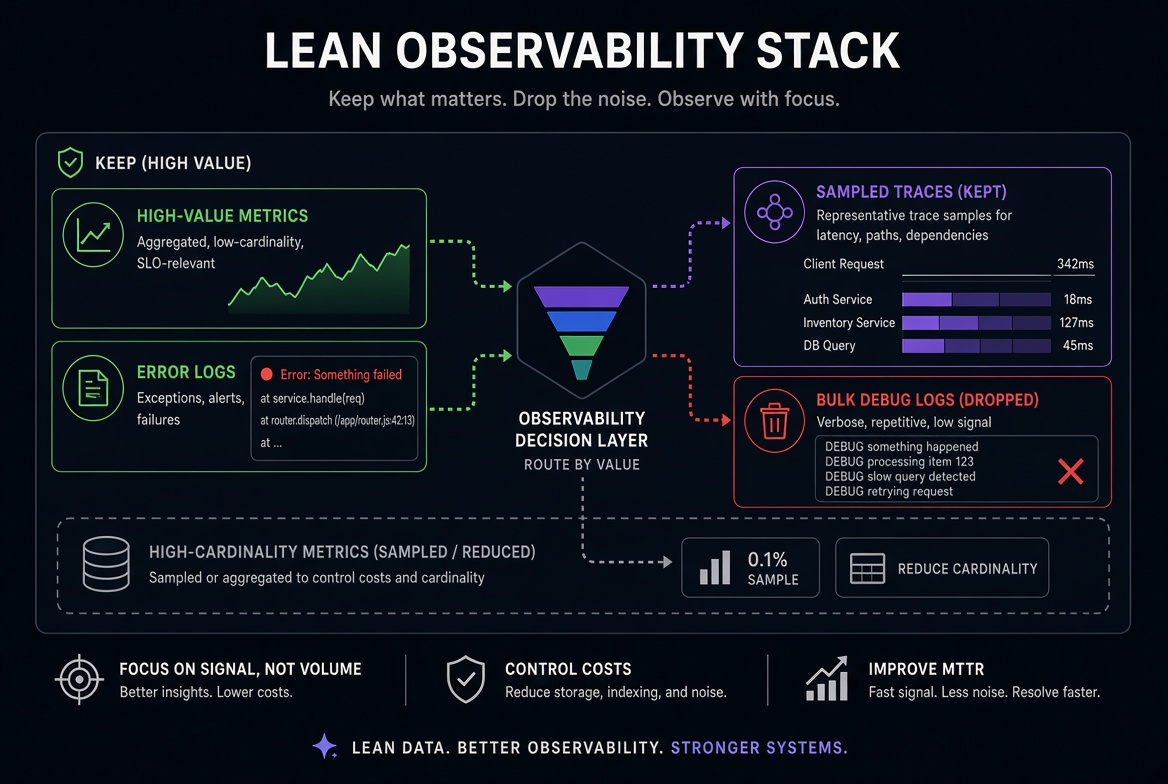
A full metrics + logs + traces stack can easily cost more than the application it observes. The lever is not “turn observability off”; it is deciding which signals are high-value and which are expensive noise, then applying sampling, retention and cheaper backends accordingly.
The minimum viable set I defend
- Metrics: the four golden signals (latency, traffic, errors, saturation) plus a small number of business metrics. Cardinality kept under control.
- Logs: 100 % of errors and audit events; everything else sampled or filtered at the source. Short hot retention.
- Traces: tail-based or probabilistic sampling that keeps the interesting requests (errors, slow ones) and discards the rest.
Everything beyond that is optional and must justify its cost.
What I routinely drop or demote
- High-cardinality labels that explode time-series count
- Debug-level logs in production
- Full request/response bodies except for a sampled subset
- Traces for every successful health-check or static-asset request
- Long retention of high-volume, low-value streams
Cheaper backends for the bulk
High-volume logs and metrics can live in cheaper stores (object storage + Athena/BigQuery style query, or a lightweight TSDB) while only the high-value subset stays in the expensive observability platform. The same principle as the logging article applies: keep the signal, move the noise.
Decision rule
If a signal has not been used in a real incident or debugging session in the last 90 days, its retention or sampling rate is a candidate for reduction. The monthly bill review includes the top observability cost lines and asks whether each still earns its keep.
Observability is not optional. Unlimited, unfiltered, long-retention observability is. A deliberately small, high-signal stack costs a fraction of the “collect everything” default and still lets the team find and fix problems.
I revisit the sampling rates and retention whenever a new service is added or when the observability bill grows faster than the application traffic. The goal is a stack that stays useful and stays affordable.
Related tools
Related reading
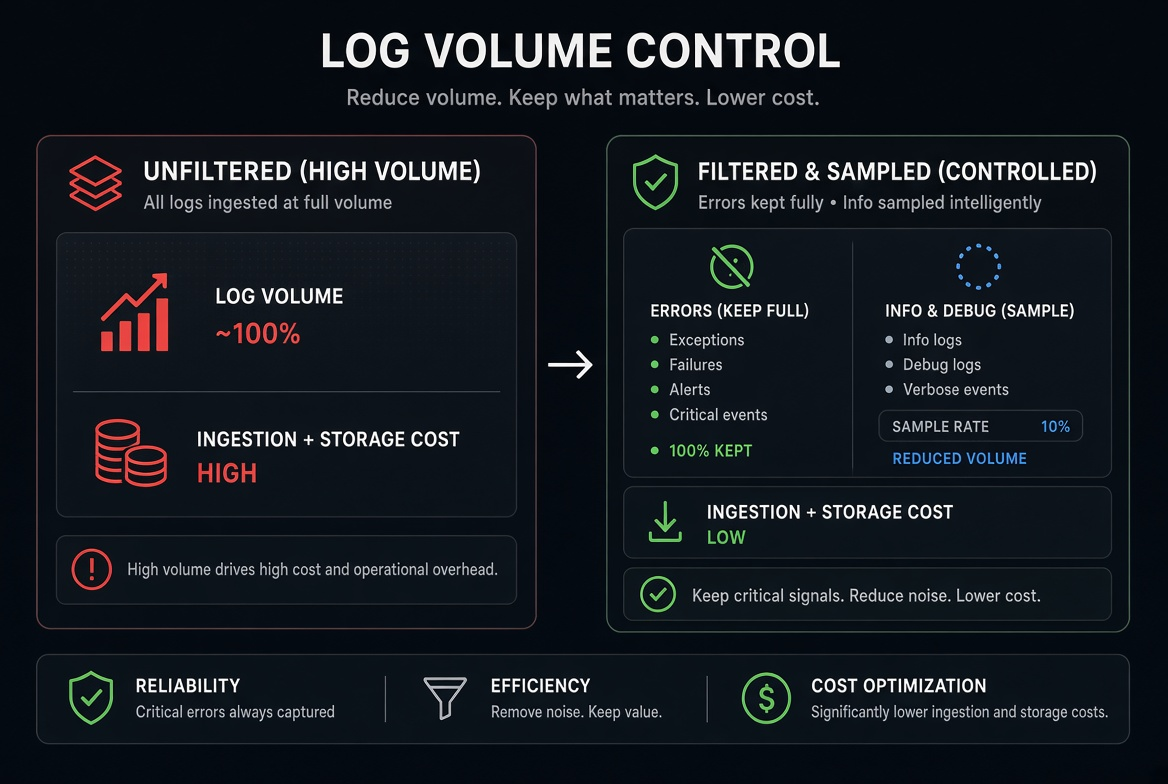
Logging that doesn’t cost more than the application
How log volume, retention, egress and indexing create cost leverage, with sampling, filtering and cheaper alternatives that keep the signal without the bill shock.
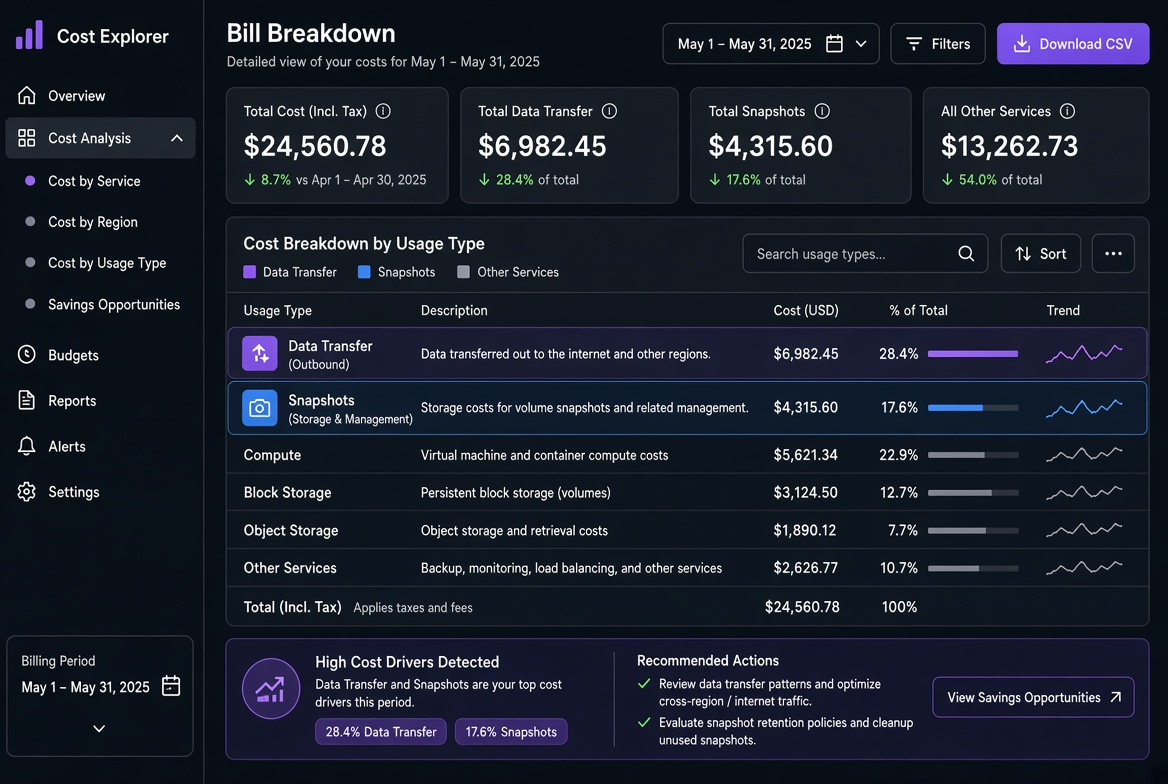
Why your first cloud bill is always higher than the calculator
The hidden line items that make the real invoice diverge from the pricing calculator: traffic, snapshots, public IPs, NAT, logging egress and the ways to find them with tags and Cost Explorer.